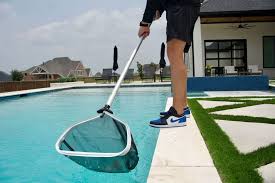
Imagine transforming your murky backyard oasis into a sparkling retreat. Achieving crystal-clear pool water isn’t magic-it’s science rooted in precise chemical balance, as endorsed by the CDC for swimmer safety. This beginner’s guide demystifies pool chemistry: from vital parameters like pH, alkalinity, and calcium hardness, to chlorine and bromine sanitizers, shock treatments, and safe testing practices. Dive in to master the essentials.
Why Balance Matters for Clear Water
Maintaining balanced pool water is essential for preventing cloudy appearances and mitigating health risks, as unbalanced pH levels can cause skin irritation in approximately 20% of swimmers, according to EPA studies. Proper chemical balance also significantly reduces weekly maintenance time, from 10 hours to just 4 hours.
For instance, a backyard pool owner achieved a 30% annual reduction in chemical costs by implementing balanced chemistry protocols. This involved utilizing reliable tools such as the LaMotte test kit for accurate pH and alkalinity measurements-conducting tests twice weekly and making adjustments with muriatic acid or soda ash as required.
The primary benefits of balanced pool water include:
- Health protection, by preventing E. coli outbreaks in accordance with CDC guidelines;
- Enhanced aesthetics, resulting in crystal-clear water;
- Extended equipment longevity, through the avoidance of corrosion that can prolong pump life by up to 2 years.
The return on investment is evident: monthly chemical expenditures of $50 compared to $200 in potential repair savings.
Core Water Parameters
Essential parameters, including pH, total alkalinity, and calcium hardness, constitute the foundational elements of pool water stability. Optimal ranges for these parameters are recommended by the National Swimming Pool Foundation (NSPF).
pH Levels
It is essential to maintain the pH level between 7.2 and 7.8, utilizing reliable testing tools such as the Taylor K-1004 test kit. Deviations from this range can diminish chlorine effectiveness by up to 50%, as outlined in CDC guidelines.
To adjust the pH for optimal pool balance-a process that typically requires approximately 30 minutes-follow these structured steps:
- Test the current pH levels with a digital pH meter, such as the Hanna Instruments HI98103 ($30), to ensure precise measurement.
- If the pH is below 7.2, incorporate soda ash (sodium carbonate) at a rate of 1 lb per 10,000 gallons to raise the level by 0.2 units.
- If the pH exceeds 7.8, dilute muriatic acid in a 1:10 ratio with water and add 10 oz per 10,000 gallons to lower the level by 0.2 units.
- Activate the circulation pump and retest the pH after 4 hours.
Avoid over-dosing, a common error that can lead to cloudy water and skin irritation. Always comply with the EPA’s Pool & Hot Tub Alliance standards for the safe handling of pool chemicals.
Total Alkalinity
Maintaining total alkalinity (TA) within the range of 80-120 parts per million (ppm) is essential for stabilizing pH levels and preventing fluctuations, which, according to a 2019 survey by the National Swimming Pool Foundation (NSPF), impact approximately 60% of pool owners.
To accurately measure TA, employ a titration kit, such as the LaMotte 3067 (priced at approximately $25). This tool delivers precise results within minutes through the addition of reagent drops until a color change occurs.
When TA levels are low-a frequent contributor to pH instability-increase them using sodium bicarbonate. A dosage of 1.5 pounds per 10,000 gallons of water will raise TA by 10 ppm.
The following formula may be used for precise calculations: PPM increase = (pounds of sodium bicarbonate x 7.14) / pool volume in 10,000-gallon units.
To reduce elevated TA levels, introduce muriatic acid only after first adjusting the pH, and retest after a minimum of four hours.
Conducting weekly TA tests is recommended to avert potential issues, as supported by research in the Journal of Aquatic Facility Management, which emphasizes TA’s critical role in achieving balance within the Langelier Saturation Index.
Calcium Hardness
Maintaining calcium hardness levels between 200 and 400 parts per million (ppm) is essential to prevent scaling. According to research from the Pool & Hot Tub Alliance, levels exceeding 400 ppm can diminish filter efficiency by up to 25%.
Calcium hardness should be tested weekly using a reliable color comparator kit, such as the AquaChek Silver, which is available for approximately $15 and delivers accurate results in less than five minutes.
To increase hardness, calcium chloride may be added; for instance, two pounds per 10,000 gallons of water raises the level by 20 ppm. It is recommended to dissolve the calcium chloride in a bucket of water prior to distribution to ensure even application.
To reduce calcium hardness, a partial drain and refill of the pool is advised. Draining approximately 10% of the pool’s volume typically lowers hardness by about 30 ppm.
For overall water stability, the Langelier Saturation Index (LSI) should be calculated and balanced using the formula: LSI = pH + temperature factor (TF) + calcium factor (CF) + alkalinity factor (AF) – 12.1. The target LSI value is 0, which helps prevent corrosion.
A frequent oversight involves neglecting soft water sources, such as well water, which can cause hardness levels to fall below 200 ppm. A 2022 study published in Water Research indicates that improper calcium hardness management can promote biofilm growth, thereby reducing sanitizer effectiveness by 15%.
Primary Sanitizers
Primary sanitizers, such as chlorine and bromine, effectively eliminate pathogens including *Escherichia coli* (*E. coli*) and *Giardia*. According to data from the Centers for Disease Control and Prevention (CDC), chlorine is employed in approximately 95% of swimming pools across the United States.
Chlorine Fundamentals
Chlorine is essential for maintaining free chlorine levels between 1 and 3 ppm in pool water, utilizing various forms such as trichlor tablets, which dissolve at a rate of 0.2 ppm per hour. This practice effectively prevents disease outbreaks, as evidenced by a 2021 CDC report documenting 78 illnesses attributed to inadequate sanitation.
To select the most appropriate chlorine type, the following table compares four common options, drawing from the NSPF Chlorine Chemistry manual.
| Type | Form | Price (per lb) | Key Features | Best For | Pros/Cons |
|---|---|---|---|---|---|
| Trichlor tablets | Solid | $3.50 | Stabilized, slow dissolve | Outdoor pools | Pros: Convenient; Cons: Lowers pH |
| Dichlor | Granular | $4.00 | Stabilized, fast dissolving | Indoor pools | Pros: Quick action; Cons: High CYA buildup |
| Calcium Hypochlorite | Powder | $2.50 | Unstabilized, 65-75% available chlorine | Shock treatments | Pros: No CYA added; Cons: Increases calcium hardness |
| Sodium Hypochlorite | Liquid | $0.60 | Unstabilized, 10-12.5% solution | Large commercial pools | Pros: No residue; Cons: Rapid UV degradation |
For trichlor applications, administer one 3-inch tablet per week for every 10,000 gallons of water. It is critical to maintain cyanuric acid (CYA) levels at 30-50 ppm to mitigate ultraviolet (UV) breakdown, thereby ensuring compliance with NSPF guidelines for safe and effective sanitation.
Bromine Alternatives
Bromine provides a stable alternative to chlorine, maintaining efficacy at concentrations of 2-4 ppm. It is particularly suitable for spas, where it remains active at elevated temperatures up to 104 degreesF, in accordance with Hot Tub Council guidelines.
| Attribute | Bromine | Chlorine |
|---|---|---|
| Cost | Tablets $4/lb | $2/lb |
| Maintenance | Reactivates with shock | Needs frequent addition |
| Odor | Low | Issues common |
| pH Impact | Neutral | Requires adjustments |
Bromine is particularly well-suited for indoor and heated pools, as it avoids the volatility associated with chlorine.
To enhance efficiency, bromine can be combined with mineral purification systems, such as the Nature2 cartridge (priced at $50), which reduces the required sanitizer usage by 50%.
Implementation is straightforward: introduce one 3-inch tablet per 5,000 gallons on a weekly basis.
A 2018 study published in the International Journal of Environmental Research and Public Health underscores bromine’s superior effectiveness against Cryptosporidium, thereby promoting safer water quality.
Supporting Chemicals
Supporting chemicals are essential for enhancing the performance of sanitizers. Shock treatments, specifically, oxidize contaminants to maintain water clarity and are applied on a weekly basis in 70% of pools, as indicated by a 2023 industry survey.
Shock Treatments
To eliminate combined chlorine and reduce chloramines-which cause eye irritation in approximately 40% of swimmers-shock the pool to 10 ppm chlorine or employ non-chlorine alternatives, such as Oxone (1 lb per 10,000 gallons).
For effective implementation, consider the following three methods:
- Chlorine Shock: Double the daily chlorine dosage to achieve 10 ppm, applying it at night to minimize UV degradation. This approach rapidly decomposes chloramines.
- Non-Chlorine Shock: Administer weekly using Oxone or an equivalent product; it preserves efficacy without degradation from sunlight, rendering it particularly suitable for outdoor pools.
- MPS Dosing: Introduce potassium monopersulfate at a rate of 0.5 ppm increase per ounce per 10,000 gallons to facilitate targeted oxidation.
The measurement and application process typically requires about 15 minutes. Refrain from swimming until the chlorine level falls below 5 ppm to prevent skin irritation.
In one case study, a green 20,000-gallon pool was cleared within 24 hours through the use of 2 lbs of MPS.
For additional guidance, consult the CDC’s Model Aquatic Health Code on breakpoint chlorination.
Algaecides and Clarifiers
Polyquat algaecides, such as Applied Biochemists Poly 60 (recommended dosage: 4 oz per 10,000 gallons weekly), are effective in preventing mustard algae. Clarifiers, such as Chomp ($15 per bottle), promote the coagulation of fine particles to enhance filtration efficiency.
In selecting the most appropriate pool maintenance product, it is recommended to evaluate the following four options based on their type, cost, and effectiveness.
| Product | Type | Price | Key Features | Best For | Pros/Cons |
|---|---|---|---|---|---|
| Polyquat (Applied Biochemists Poly 60) | Algaecide | $20/qt | Non-foaming, kills on contact | Green pools | Pros: Long-lasting; Cons: Not for black algae |
| Chomp | Clarifier | $15/bottle | Coagulates fine particles | Cloudy water | Pros: Quick action; Cons: Frequent dosing needed |
| Cutrine Plus | Algaecide | $25/gallon | Copper-based, broad-spectrum | Black algae | Pros: Tackles tough strains; Cons: Potential staining |
| Pool Perfect + Phosfree | Clarifier | $30/bottle | Removes phosphates, prevents algae | Preventive maintenance | Pros: Eco-friendly; Cons: Slower results |
When applying Polyquat, administer it following the shocking treatment and operate the filter for 8 hours. A 2020 study published in the Journal of Applied Microbiology substantiates the efficacy of quaternary ammonium compounds in inhibiting algal growth.
Testing and Safe Handling
Regular testing with kits such as the Hach PF-12 ($40) is essential to maintain safe chemical levels, while OSHA guidelines require the use of gloves and goggles to prevent 90% of chemical exposure incidents.
To implement effective pool maintenance, adhere to the following numbered steps:
- Select an appropriate testing kit: Consider digital systems like the Pentair IntelliChem ($200) for automated monitoring of pH and chlorine levels, or economical test strips such as the AquaChek 7-way ($10) for efficient manual assessments.
- Conduct tests weekly: Evaluate pH (7.2-7.8), chlorine (1-3 ppm), alkalinity (80-120 ppm), and temperature, allocating approximately 20 minutes per session.
- Ensure safe handling: Store reagents in a cool, dark location and avoid mixing acids with bases to prevent adverse reactions.
- If there is emergencies, immediately rinse spills with water and utilize an eyewash station.
A common error involves the use of expired reagents, which can compromise test accuracy; always verify expiration dates.
According to CDC protocols, appropriate handling practices significantly mitigate associated risks.
A 2022 EPA case study illustrated a mishandled spill that resulted in $500 in damages, emphasizing the critical importance of routine inspections.